ServicesCompliance Support
Ongoing Compliance Support in Miramar
Approval of your Live Local Act exemption covers a single tax year. Set-aside rents, tenant incomes and qualifying unit counts must stay inside the limits all year, and your records must prove it at filing time. We track those pieces between cycles and check back once each filing is accepted.
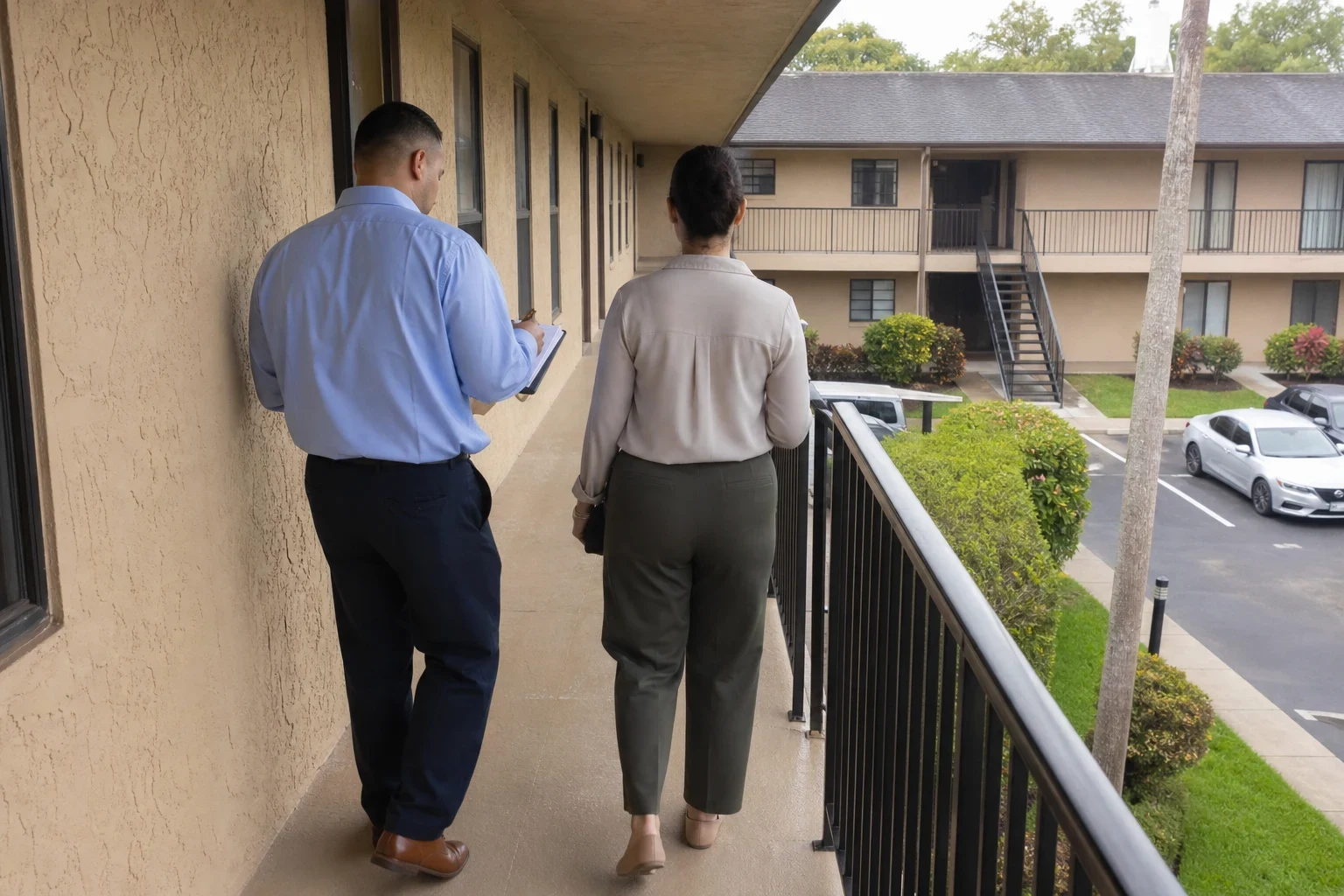
What ongoing support covers and when it makes sense
The property tax exemption under section 196.1978 of the Florida Statutes is earned again each year. The property appraiser can deny the next year's exemption if a set-aside unit was rented above the Florida Housing Finance Corporation limit for its tier, or if a tenant's income was never documented against the area median income band for that unit. Most of the problems we find start small: a renewal priced off a market comp instead of the published limit, or a unit moved from the 80% tier to the 120% tier without anyone updating the rent roll.
Ongoing support is the right call once your first exemption is approved, and again whenever a property changes owners, management companies or leasing staff. We work from our office in Miramar and by phone and video, so your on-site team does not lose a day to meetings.
Our part does not end when a filing is accepted. After each cycle we check back, walk your property manager through what to keep on file and explain what changes when new income and rent limits come out. Clients include Coral Rock Development Group and Terra Group.
What we handle between filings
- Rent roll checks against FHFC limits
- We compare each set-aside unit's contract rent to the current limit for its income tier and bedroom count. Utility allowances count toward that ceiling, so we check them as well.
- Tenant file audits
- We review resident files for income documents, signed certifications and dates that line up with the lease. A certification dated after move-in is one of the most common gaps, and it is far easier to correct now than once the appraiser asks.
- Set-aside unit map
- When a unit turns over and is re-leased at a different tier, your count of qualifying units changes. We keep a unit-by-unit record so you always know whether the property still meets the minimum affordable unit count.
- Deadline calendar
- We track the date for your FHFC certification request and the March 1 deadline for the DR-504AFH with the county property appraiser. You hear from us early enough to pull documents without rushing.
- Annual limit updates
- When FHFC publishes new income and rent limits, we recalculate the ceiling for every set-aside unit. Your leasing team gets a clear list of which renewals can move and which are already at the cap.
Signs your property needs ongoing support
Renewals priced by the market
If your leasing software sets renewal rents from comps, set-aside units can drift past the FHFC limit without anyone noticing until filing season.
Stale or missing income certifications
Files with a move-in certification but nothing since, or pay stubs with no signed form, leave the exemption exposed.
New management or leasing staff
Turnover on site is when tier assignments and file habits get lost. A new team usually needs a walkthrough of what the exemption actually requires.
A records request from the appraiser
A letter asking for rent rolls or tenant documentation means the exemption is under review. Organized, consistent records answer it quickly.
Nobody owns the calendar
If the certification request and the DR-504AFH depend on one person remembering, a vacation or resignation can cost a full year of savings.
What moves the cost of ongoing support
We set the fee once we see the property's records, not before. The price follows the work involved, mostly the number of units we track and how clean the files are when we start. You hear the full scope on the phone before anything begins, with no add-ons later.
Number of set-aside units
Every affordable unit means another rent check and another tenant file to review each cycle.
Condition of existing files
Complete, dated certifications move fast. Files that need rebuilding take more hours in the first year, then less from then on.
Properties and ownership entities
Several buildings under separate entities mean separate filings and separate records to keep straight.
Check-in frequency
Properties with heavy turnover usually need more frequent reviews than stable ones.
How ongoing support works
- 1
Phone call and Live Local review
You tell us about the property, the unit mix and where things stand. We explain what we would check and how often, and whether the property looks like a fit.
- 2
Baseline audit
We work from exports of your rent roll and a sample of tenant files. You get a written list of every gap we find, ranked by how much risk it puts on the exemption.
- 3
Scheduled check-ins
We set a check-in cadence that fits the size of the property. Each one covers rent changes, move-ins, move-outs and any unit that switched tiers.
- 4
Filing season and follow-up
We assemble the support for your FHFC certification and DR-504AFH. Once filings are accepted we check back, confirm what the agencies received and go over what your staff should keep doing until the next cycle.

Questions about ongoing compliance support
Our exemption was already approved. Do we still need this?
Approval covers one tax year. The appraiser looks at the property again each year, and the rents and incomes that count are the ones in place during that year. Ongoing support keeps those numbers inside the limits so the next filing is routine.
Do you need logins to our property management software?
No. Exports of the rent roll and copies of tenant files are usually enough. If your team prefers a shared folder, we work from that.
What happens if you find a unit rented above the limit?
We tell you right away, show the limit that applies and explain the options for that lease. Catching it mid-year gives you time to bring the unit back in line before the records are reviewed.
How does this relate to annual recertification and income verification?
Ongoing support is the year-round layer. Annual Recertification handles the yearly filings, and Resident Income Verification covers the detailed tenant income work. Many clients use all three, and we coordinate them so nothing is done twice.
Can you support properties outside Miramar?
Yes. We work with properties in Pembroke Pines, Davie, Miami Lakes, Hialeah and the surrounding area. Broward and Miami-Dade each run their own appraiser process, and we keep the calendar and paperwork for each county separate.

Keep this year's exemption on track for next year
Tell us about your property and where the records stand. We will explain what ongoing support would cover and how we check back after each filing.